
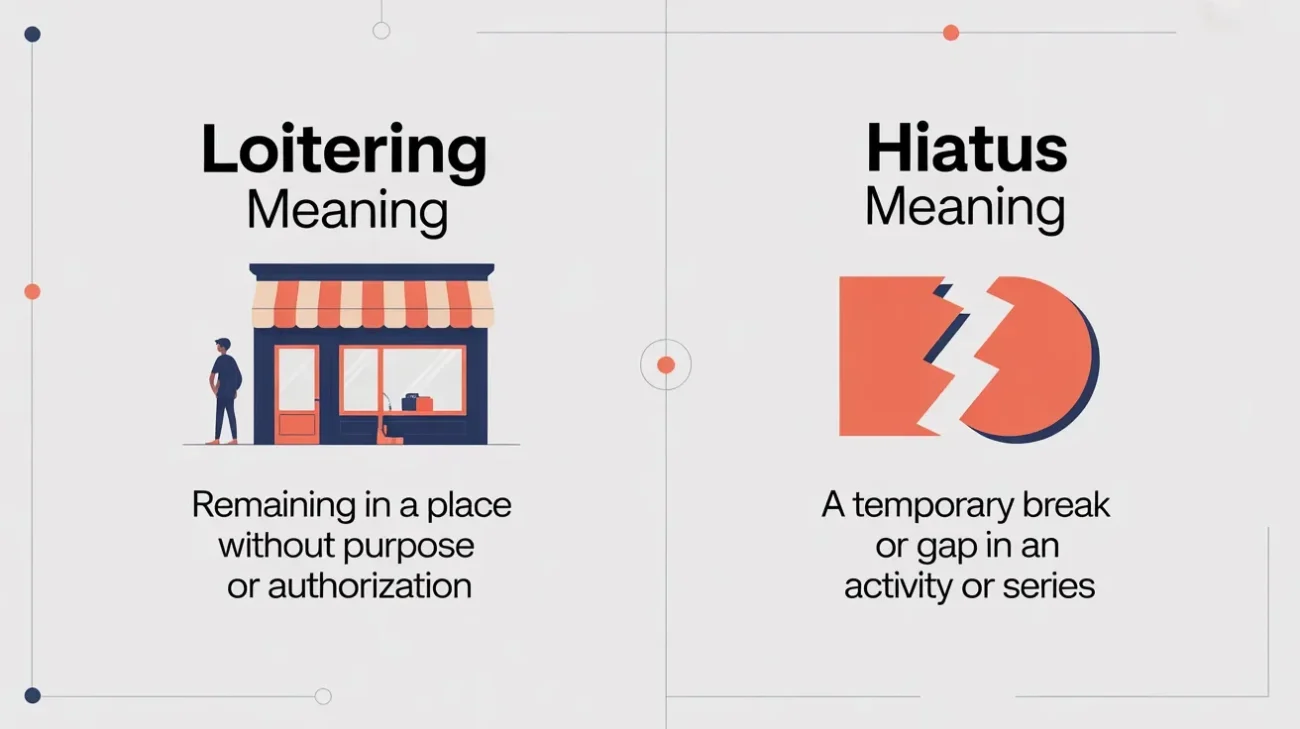
Understanding words like loitering, hiatus, and phrases like stand for can be confusing, especially when people use them in texting, social media, or real-life conversations. Many misinterpret these words, leading to awkward or even incorrect usage.
This guide will break down each term, provide real-life examples, and explain how to use them correctly in messages and everyday language. By the end, you’ll confidently recognize these terms and apply them naturally in your conversations.
Understanding Loitering
Loitering Meaning
At its core, loitering refers to lingering or hanging around in a place without a clear purpose. While it’s often linked to legal or security concerns, loitering doesn’t always mean someone is doing something wrong.
Legal vs. Casual Loitering
- Legal Loitering: In some countries, loitering near certain public spaces (banks, schools, or government offices) can be illegal. Authorities may intervene to prevent potential crime.
- Casual Loitering: Hanging out in a park, café, or mall without any ill intent is considered casual loitering.
Common Misconceptions About Loitering
Many people assume loitering is always illegal. In reality:
- Not all loitering is criminal. Simply standing around or waiting is not illegal in most public areas.
- Intent matters. Loitering becomes illegal if it is intended for criminal activity or obstructing others.
Example:
Two teenagers sitting on a bench chatting after school are loitering in the casual sense.
A person lingering outside a closed shop at night, casing for theft, would be illegal loitering.
Loitering in Text
People also use loitering metaphorically in texting or social media. For example:
- “Stop loitering in my chat, we’re talking about serious stuff.”
- “He’s just loitering around social media, not posting anything meaningful.”
Here, loitering implies idling without purpose, either physically or digitally.
Real-Life Examples of Loitering
- Streets: Teenagers waiting for friends outside a café.
- School: Students hanging in hallways during breaks.
- Office: Colleagues standing near the water cooler chatting for extended periods.
Fact: In the United States, local municipalities regulate loitering in public spaces, and penalties can range from fines to temporary detention.
Understanding Hiatus
Hiatus Meaning
A hiatus is a temporary break or pause in activity, speech, or production. The word comes from the Latin hiatus, meaning “gap” or “opening.”
- Common Usage: Work breaks, TV show pauses, social media inactivity.
- Professional Context: Employees may take a sabbatical or leave of absence.
Common Misconceptions About Hiatus
- A hiatus does not imply permanent leave. It’s always temporary.
- People often confuse hiatus with vacation. A hiatus may involve personal reflection, work breaks, or content gaps.
Example:
- “The show went on hiatus for two months due to production delays.”
- “She announced a hiatus from Instagram to focus on mental health.”
Hiatus in Text and Social Media
People frequently use hiatus in texting or posts:
- “I’m taking a hiatus from posting memes for a while.”
- “Our podcast is on hiatus until next season.”
This usage signals a planned break, not abandonment.
Real-Life Examples of Hiatus
| Context | Example |
| Workplace | Sabbatical, unpaid leave, or project pause |
| Entertainment | TV shows, YouTube channels, podcasts |
| Personal | Social media detox or mental health break |
Fact: In entertainment, shows on hiatus can actually boost ratings. Fans build anticipation during the pause, leading to higher engagement when content resumes.
Understanding “Stand For”
Stand For Meaning
The phrase “stand for” indicates representation, support, or meaning. It’s commonly used in formal and informal contexts.
- Formal: “The organization stands for equality and justice.”
- Casual/Text: “I stand for honesty in all my friendships.”
Examples in Text Messaging
- “I stand for kindness, even in tough situations.”
- “This emoji stands for happiness .”
Common Misunderstanding:
Some people confuse stand for with stand by, which means to support actively or wait. Always remember:
- Stand for = represent or symbolize
- Stand by = support or be ready
Loitering vs. Hiatus vs. Stand For
Understanding the differences between these terms is essential. Here’s a clear comparison:
| Term | Definition | Usage in Text | Real-Life Context | Connotation |
| Loitering | Lingering without purpose | Casual, often negative | Streets, schools, offices | Often negative |
| Hiatus | Temporary break or pause | Neutral, professional | Work, entertainment, personal | Neutral |
| Stand For | Represent or support | Casual/inspirational | Messaging, social media, advocacy | Positive/neutral |
Tip: Use loitering for idling behavior, hiatus for temporary breaks, and stand for for representing ideas or principles.
Case Studies and Real Examples
Loitering
- Case Study 1: A city council in New York fined people loitering outside stores late at night to reduce petty crime.
- Case Study 2: A mall in California allows teenagers to loiter freely, as long as they do not cause disturbances.
Hiatus
- TV Example: Stranger Things went on hiatus between seasons, generating massive social media engagement.
- Workplace Example: Tech company employees took a 3-month hiatus, leading to increased productivity upon return.
Stand For
- Example: Nike’s slogan “Just Do It” stands for empowerment, motivation, and breaking barriers.
- Example: In text messaging, hashtags like #StandForEquality communicate support for a cause.
Also Read This: Gooning Meaning TikTok
Tips for Using These Words Correctly
Loitering
- Use for idling, lingering, or hanging around.
- Avoid legal contexts unless necessary.
- Don’t confuse casual loitering with criminal behavior.
Hiatus
- Use for temporary breaks in any activity.
- Clarify duration if necessary to avoid misunderstanding.
- Can be personal, professional, or entertainment-related.
Stand For
- Use for representing, supporting, or symbolizing.
- Avoid using interchangeably with “stand by.”
- Works well in inspirational or advocacy contexts.
Conclusion:
Understanding loitering meaning, hiatus meaning, and stand for can improve both your written and spoken communication.
- Loitering: Lingering without purpose, sometimes negative, sometimes casual.
- Hiatus: A temporary break, always neutral and widely applicable.
- Stand For: Represents ideas, values, or support, used in text and speech.
Using these words correctly ensures your conversations, texts, and posts are clear and impactful.
By learning these distinctions, you can avoid common mistakes, engage more meaningfully with your audience, and confidently use these terms in daily life.
FAQs:
Q1: What is loitering in simple words?
A: Loitering means hanging around a place without a specific purpose.
Q2: How do you use hiatus in a sentence?
A: “The TV show went on hiatus for two months due to production delays.”
Q3: What does stand for mean in text?
A: It means representing, supporting, or symbolizing something, like a principle or idea.
Q4: Can loitering ever be legal?
A: Yes, casual loitering in public spaces without harmful intent is usually legal.
Q5: How long does a hiatus usually last?
A: A hiatus can last days, months, or even years depending on context. It’s always temporary.

Kayla Foster is a creative contributor at QuickReplyz.com who enjoys helping people express their thoughts effortlessly. She writes ready-to-use replies, messages, and captions that save time and improve communication. Her content is simple, useful, and tailored for real-life situations.
